Guía
Qué hacer en Los Alcázares
Deportes acuáticos en la laguna más tranquila de Europa, ruinas romanas, calas salvajes de Calblanque y mañanas de mercado sin prisa. El manual local completo.
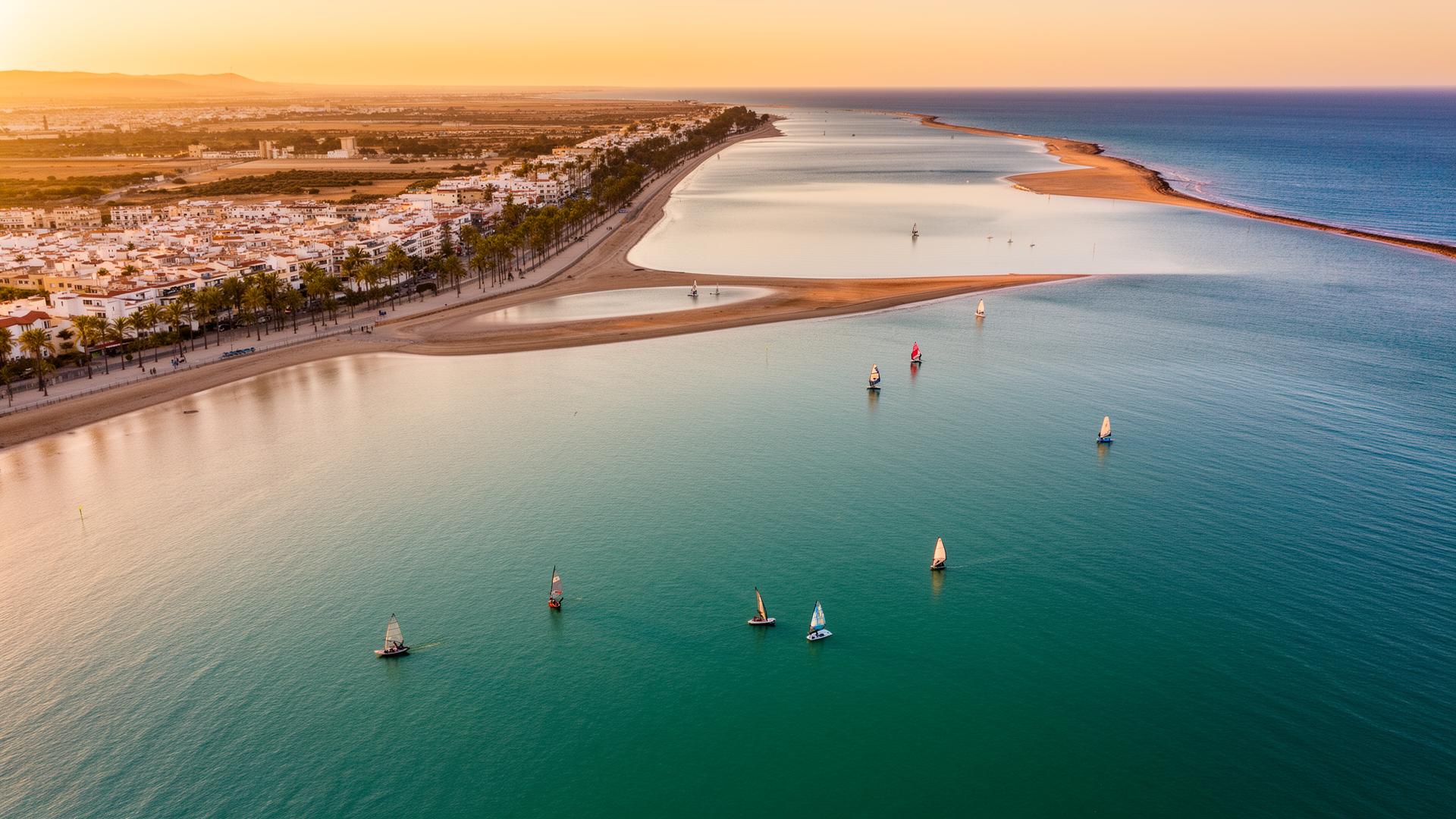
Desde Los Alcázares puedes navegar a vela o hacer paddle en el Mar Menor, recorrer en bici la vía verde plana junto a la laguna, ver flamencos en las salinas de San Pedro (10 min), o ir a Cartagena romana (30 min), las calas salvajes de Calblanque (35 min), el faro de Cabo de Palos (30 min) o Murcia capital (45 min). Todas excursiones de media jornada.
Última actualización:
Los Alcázares está en la orilla oeste del Mar Menor y ofrece mucho más de lo que parece: siete kilómetros de playas suaves, agua cálida y tranquila, un paseo con palmeras, restaurantes de pescado fresco y excursiones fáciles a Cartagena, Calblanque y San Pedro del Pinatar.
Deportes acuáticos
La laguna poco profunda y la brisa de la tarde hacen del Mar Menor uno de los lugares más fáciles de España para aprender deportes acuáticos.
Windsurfing
Agua plana y stabiele zomerbries rond Los Narejos y Playa Honda zijn vriendelijk voor beginners y leuk voor ervaren surfers.
Abrir en Maps →Sailing
Club Náutico Los Alcázares geeft lessen voor kinderen y volwassenen op rustig beschut water.
Abrir en Maps →Kayaking & SUP
Peddelen bij zonsopkomst op spiegelglad water is een van de mooiste eenvoudige ervaringen hier. In de zomer verhuren kiosken SUP's y kajaks langs de boulevard.
Abrir en Maps →Kitesurfing
Playa Honda is een fiable kitespot met zijwind, vlak water y geleidelijk dieper wordend water.
Abrir en Maps →Pedalos & electric boats
Makkelijk per uur te huren aan de stadsstranden, vooral leuk met jonge kinderen.
Abrir en Maps →Planes con niños
Agua poco profunda, un paseo llano y muchas salidas sencillas de medio día hacen que el pueblo sea muy familiar.
Golf Delux mini-golf
De best beoordeelde entertainmentplek in de stad, met creatieve holes y een rustig tempo voor verschillende leeftijden.
Abrir en Maps →Parque de las Peñas Huertanas
Park met palmbomen y gezinsplek aan het begin van de avond, met speeltuinen, bankjes y brede paden.
Abrir en Maps →Aqua Natura Murcia
Waterpark, dierentuin y botanische tuin in één dagtrip voor gezinnen.
Abrir en Maps →Glass-bottomed boat trips
Korte boottochten vanuit de haven geven kinderen onderwaterzicht op zeegras y vissen zonder nat te worden.
Abrir en Maps →Cycling the lagoon shore
Vlakke wegen y huurfietsen maken de route naar El Carmolí een rustige ochtendrit.
Abrir en Maps →Cultura e historia
Historia romana, morisca, medieval y aeronáutica se esconden detrás del aspecto de destino de playa.
Las Balsas Romanas
Romeinse stenen bassins in Los Narejos, nog steeds mysterieus y verrassend groot.
Abrir en Maps →Museo Aeronáutico
Compact museum over Spanje's eerste watervliegtuigbasis, met foto's, propellers y uniformen.
Abrir en Maps →Hotel Spa La Encarnación
Historisch kuurhotel uit 1904 aan zee, waar koning Alfonso XIII kwam voor het water van de Mar Menor.
Abrir en Maps →Torre del Rame
Middeleeuwse wachttoren die waarschuwde voor Barbarijse piraten, vooral mooi rond golden hour.
Abrir en Maps →Excursiones
Ruinas romanas, playas salvajes, una ciudad barroca con catedral y calas mediterráneas quedan a menos de una hora.
Cartagena
Ondergewaardeerde Romeinse havenstad met Teatro Romano, musea, kasteeluitzicht y uitstekende tapas op Calle Mayor.
Por qué ir: Roman theatre, tapas, military history
Abrir en Maps →Murcia city
Compacte barokke hoofdstad met de kathedraal Santa María, Casino de Murcia y Mercado de Verónicas.
Por qué ir: Cathedral, Casino, food market
Abrir en Maps →Parque Regional de Calblanque
Beschermde wilde mediterrane kust: duinen, baaien, oude zoutwerken y geen hotelstrip.
Por qué ir: Wild coves, dunes, snorkelling
Abrir en Maps →La Manga del Mar Menor
De 22 km lange zandstrook met de lagune aan de ene kant y de open Middellandse Zee aan de andere.
Por qué ir: Two seas in one trip
Abrir en Maps →Cabo de Palos & Islas Hormigas
Vissersdorp met vuurtoren, Caldero-restaurants y een van de beste duikreservaten van de westelijke Middellandse Zee.
Por qué ir: Diving, seafood, lighthouse
Abrir en Maps →San Pedro del Pinatar salt lakes
Beschermd wetland met flamingo's, modderbaden y fácile fietspaden, gratis te bezoeken.
Por qué ir: Mud baths, flamingos, wetlands
Abrir en Maps →Mercados y vida local
Mercados, chiringuitos y fiestas de temporada muestran el ritmo de un pueblo que aún se siente local.
Friday street market
Verse producten, kleding, leer y huishoudspullen op vrijdagochtend. Kom vroeg.
Abrir en Maps →Semana Internacional de la Huerta y el Mar
Augustusfestival rond landbouw uit het binnenland y vissersdorpen aan de Mar Menor, met barracas, ambachten, dans y eten.
Abrir en Maps →Fiesta de la Virgen de la Asunción
Processie op 15 augustus langs de boulevard y botenvloot op de lagune, eindigend met vuurwerk op het water.
Abrir en Maps →Cuándo visitar
Cómo se siente realmente cada estación
Primavera (marzo-mayo)
18 a 22°C en mayoExcelente para naturaleza y excursiones. Playas tranquilas.
Flamencos, flores silvestres, clima cómodo y agua de la laguna calentándose rápido. En Semana Santa llega la fiesta pirata.
Verano (junio-agosto)
26 a 28°CTemporada alta. Playas y noches en su mejor momento.
Junio es ideal; julio y agosto son calurosos, animados y llenos de fiestas. Reserva pronto.
Otoño (septiembre-noviembre)
24 a 26°C en septiembreCálido, menos lleno y muy agradable.
Septiembre conserva el agua cálida con menos gente. Octubre trae la fiesta del Caldero.
Invierno (diciembre-febrero)
12 a 15°CSuave y tranquilo. Ideal para largas estancias.
Máximas de 14 a 18°C son normales, las playas están vacías y los restaurantes se sienten locales.
¿Listo para reservar tu estancia?
Reserva directamente para obtener la mejor tarifa, o usa tu plataforma preferida.