Guide
Things to do in Los Alcázares
Water sports on Europe's calmest lagoon, Roman ruins, wild Calblanque coves and slow market mornings. A full local playbook.
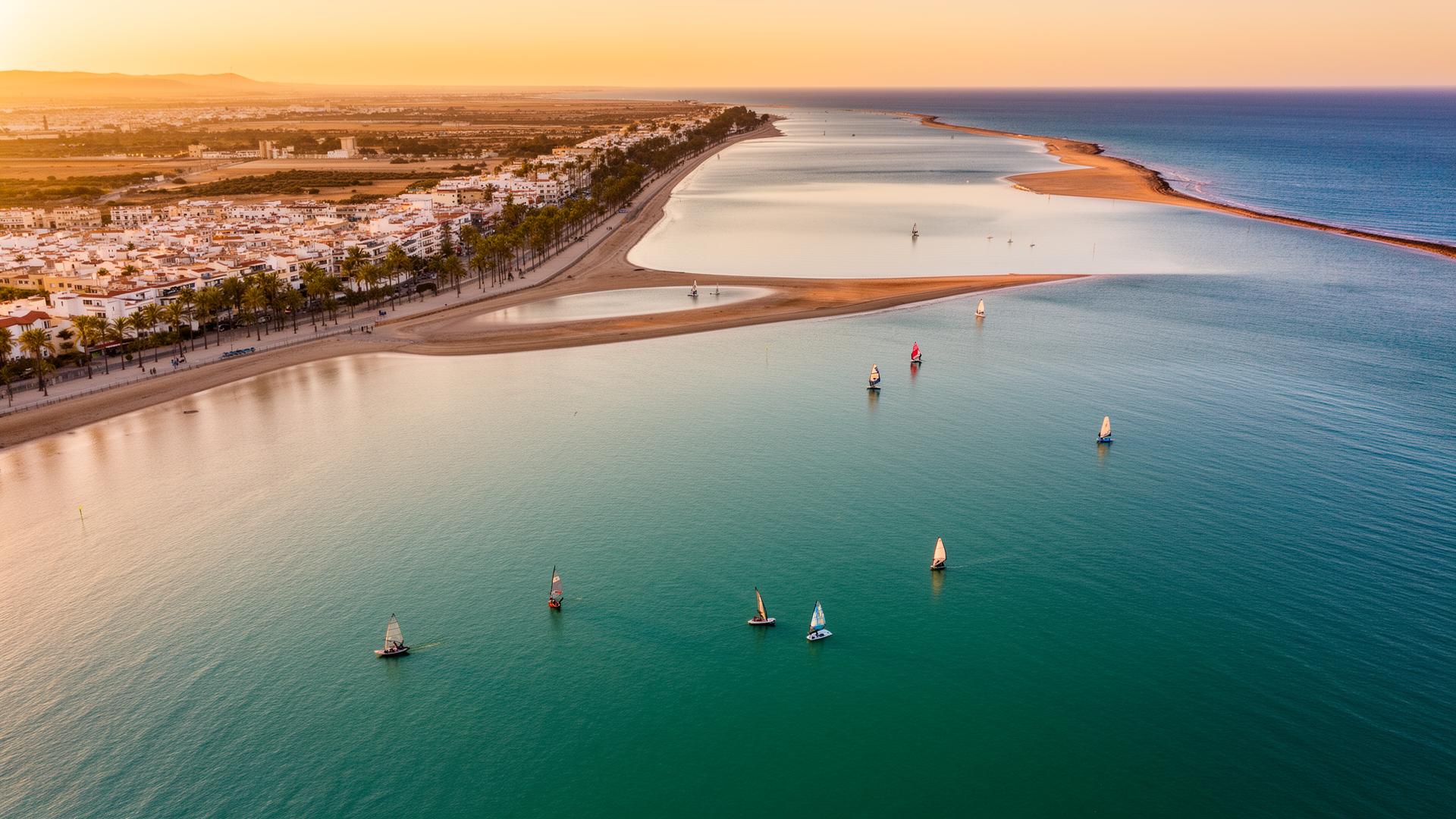
Los Alcázares sits on the western shore of the Mar Menor, Spain's largest coastal lagoon, and it punches well above its weight for a town of its size. Seven kilometres of gently shelving beaches, water so calm and warm it feels almost therapeutic, a palm-lined promenade made for slow evening strolls, and a food scene built around fresh fish and locally grown rice. Day trips to Roman Cartagena, wild Calblanque and the salt flats of San Pedro del Pinatar are all within easy reach, making Los Alcázares a genuinely useful base for the whole Region of Murcia.
Water sports
The Mar Menor is one of the best places in Spain to learn water sports from scratch. The shallow depth and predictable afternoon breeze create near-perfect conditions for beginners, while experienced riders can push harder as the wind strengthens through the day. Schools operate from late March through November.
Windsurfing
The afternoon thermal across the Mar Menor makes Los Alcázares, Playa Honda and Los Narejos go-to windsurfing spots. Flat water and consistent Force 3 to 4 winds in summer are forgiving for learners. Mar Menor Sports Centre near Los Narejos offers certified lessons and hire for all levels.
Open in Maps →Sailing
The lagoon hosts official regattas and is considered among Spain's finest inland sailing grounds. Club Náutico Los Alcázares runs courses for children and adults. Calm enclosed water means nervous first-timers relax quickly.
Open in Maps →Kayaking & SUP
Paddling at sunrise, when the water is glass-flat and the light is at its most beautiful, is one of those experiences that stays with you long after the holiday. Several rental kiosks line the promenade. Guided eco-tours head south toward El Carmolí, paddling alongside flamingos and egrets in the wetlands.
Open in Maps →Kitesurfing
Strong cross-shore winds at Playa Honda make this one of the better kite spots in the region. Book lessons well in advance for July and August. Flat water and gradual depth make relaunches much easier than on the open Mediterranean.
Open in Maps →Pedalos & electric boats
Not every water sport needs adrenaline. Pedalos and small electric boats hire by the hour along the town beach. Young children love them, and the view of the old spa hotel from the water is surprisingly pleasing.
Open in Maps →Family activities
Los Alcázares is genuinely family-friendly. Shallow lagoon water is tailor-made for small children, and the flat promenade is pushchair-friendly and shaded by mature palms. Beyond the beach there is plenty to keep older children occupied.
Golf Delux mini-golf
Highest-rated entertainment in town. Imaginative course layouts, games at a pleasant pace. A great mid-afternoon option when the beach heat peaks. Older children find it genuinely engaging.
Open in Maps →Parque de las Peñas Huertanas
Palm-shaded park at the heart of town. The social hub for families in the early evening, with play equipment, benches and wide paths. In August it transforms into the main festival site for the Semana Internacional de la Huerta y el Mar.
Open in Maps →Aqua Natura Murcia
The closest major water park, combined with a zoo and botanical garden. A full-day outing for families with mixed ages. Best on a weekday in July or August to avoid weekend queues.
Open in Maps →Glass-bottomed boat trips
Short excursions from the town harbour give children an underwater view of seagrass beds and fish without getting wet. Longer trips head north to the San Pedro del Pinatar flamingo colony.
Open in Maps →Cycling the lagoon shore
Flat roads make this surprisingly good cycling territory. Bikes (with child seats and trailers) hire in town. The route south to El Carmolí passes salt flats and scrubland and is a gentle morning ride.
Open in Maps →Culture & history
The name Los Alcázares comes from the Arabic 'Al Kazar' (palace or noble house). Moors recognised the therapeutic value of these waters long before modern tourism arrived. The town layers Roman, Moorish, medieval and 20th-century aviation heritage into a surprisingly interesting cultural trail for a resort.
Las Balsas Romanas (Roman pools)
Roman-era stone pools hidden for nearly two thousand years and uncovered during construction in Los Narejos. Their exact purpose is still debated, possibly hydraulic or linked to garum production. The scale of the stonework is remarkable for such a quiet corner.
Open in Maps →Museo Aeronáutico
Los Alcázares was home to Spain's first seaplane base (1915). This compact museum tells that story through photographs, propellers, uniforms and personal accounts of aviators who trained here through both World Wars and the Civil War.
Open in Maps →Hotel Spa La Encarnación
Built in 1904 and still standing in distinguished form on the seafront. King Alfonso XIII and other notables stayed here for the Mar Menor waters. The sea-facing terrace is one of the nicest spots in town for a coffee.
Open in Maps →Torre del Rame
A medieval watchtower set among date palms and dry scrub, used to warn coastal communities of Barbary pirate raids in the 16th and 17th centuries. Particularly photogenic at golden hour.
Open in Maps →Day trips
Los Alcázares sits at the centre of one of the most varied day-trip networks in southeast Spain. Roman ruins, wild nature reserves, a Baroque cathedral city and the Mediterranean's finest coves are all within an hour's drive on good roads.
Cartagena
One of Spain's most underrated cities. Founded by Carthage in 228 BC, later a major Roman provincial capital. The Teatro Romano (discovered under the old town in 1988), the Carthaginian and Roman Museum, the Castle of the Conception and the city walls all sit within walking distance. Outstanding tapas on Calle Mayor.
Why go: Best-preserved Roman theatre in Spain, excellent tapas, fascinating military history
Open in Maps →Murcia city
The regional capital is a compact Baroque city most coastal visitors overlook, which means the old quarter feels genuinely local. The Cathedral of Santa María took 300 years to complete. The Casino de Murcia is one of the most opulent interiors in Spain. Mercado de Verónicas is a wonderful covered market.
Why go: Baroque cathedral, extraordinary Casino, outstanding food market
Open in Maps →Parque Regional de Calblanque
A protected park offering some of the most unspoiled Mediterranean coastline in Spain. No hotels, no sun-bed hire, no chiringuitos. Just wild dunes, crystal-clear coves, ancient salt works and low scrubland. The reward is a succession of beaches that look as they would have done five hundred years ago.
Why go: Completely undeveloped coves, wild dunes, exceptional snorkelling
Open in Maps →La Manga del Mar Menor
The 22 km sand spit separating the Mar Menor from the Mediterranean is a world unto itself. Drive its length and you pass from busy resort strips to quiet dune paths where the lagoon sits on one side and open sea on the other.
Why go: Unique dual-coast geography, lagoon-to-open-sea beach hopping
Open in Maps →Cabo de Palos & Islas Hormigas
A small fishing village with a handsome 19th-century lighthouse and excellent seafood specialising in Caldero rice. The real draw is the Islas Hormigas marine reserve just offshore. One of the top scuba spots in the western Mediterranean, home to grouper, barracuda and moray eels.
Why go: Top-rated scuba diving, Caldero restaurants, lighthouse walk
Open in Maps →San Pedro del Pinatar salt lakes
Just north of Los Alcázares, a vast protected wetland where flamingos feed in pink-tinged salt lakes and the shoreline mud has a mineral composition similar to the Dead Sea. Coat yourself in dark grey mud, bake in the sun, rinse off in the lagoon. Free.
Why go: Free therapeutic mud baths, flamingo colony, flat wetland cycling
Open in Maps →Águilas
An hour south, a working fishing port with a hilltop castle and the Cuatro Calas: four bays cut into dramatic volcanic rock that rival anything on the Costa Blanca for swimming and snorkelling. Famous for one of Spain's most theatrical Carnivals every February.
Why go: Volcanic coves, castle, fish restaurants, February Carnival
Open in Maps →Markets & local life
Los Alcázares has the unhurried, confident rhythm of a town that has been welcoming visitors for over a century without losing its character. The local market, summer beach bars and the cycle of festivals give you a genuine window into how people here actually live.
Friday street market
Outdoor market along the main town streets on Friday mornings. Stalls sell fresh local fruit and vegetables (tomatoes, peppers, courgettes, peaches in summer) alongside clothing, leather and household items. Very much a market for locals rather than tourists, which keeps quality high and prices honest. Arrive early.
Open in Maps →Semana Internacional de la Huerta y el Mar
Week-long festival in the second half of August celebrating the link between inland farming communities and the Mar Menor fishing towns. Traditional barracas, craft stalls, folk dance, regional food. Declared of Regional Tourist Interest. The most atmospheric week of the year.
Open in Maps →Fiesta de la Virgen de la Asunción
Patron saint festival on 15 August. The day builds through music and food before a solemn foot procession along the promenade transfers to a flotilla of decorated boats on the lagoon, accompanied by fireworks reflecting off the water. The single most striking night of the year.
Open in Maps →Barbary pirate reenactment
Every Easter weekend, the town stages a theatrical reenactment of the pirate raids that terrorised the Mar Menor coast in the 16th and 17th centuries. Costumed pirates storm the beach from decorated boats, jugglers and falconers work the crowds, a medieval market fills the streets.
Open in Maps →Día de Los Alcázares & Caldero festival
On 12 October the town celebrates municipal independence with a communal Caldero cooking competition on the beach. Caldero is the signature Mar Menor dish: rice cooked in rich fish broth in an iron cauldron. By dawn cooking fires are lit along the sand.
Open in Maps →When to visit
What each season really feels like
Spring (March to May)
18 to 22°C by MayExcellent for nature and sightseeing. Quiet beaches.
Arguably the most rewarding time to visit. Flamingos are at their most numerous in the salt lakes, wildflowers carpet the hills around Calblanque, and the Mar Menor warms fast (swimming is comfortable from late April). The Easter pirate festival makes Holy Week particularly lively. Hotels are cheaper and restaurants take reservations without the summer hassle.
Summer (June to August)
26 to 28°CPeak season. Beaches and nightlife at their best.
June is the sweet spot: warm enough to swim, busy enough to be lively but not yet at full capacity. July and August bring temperatures above 35°C inland, though the sea breeze keeps the coast cooler. Chiringuitos run full tilt, the promenade buzzes until midnight, and the August festivals are memorable. Book accommodation early.
Autumn (September to November)
24 to 26°C in September, cooling through OctoberWarm, uncrowded, one of the coast's best-kept secrets.
September is when many locals consider the beach at its best. The water has stored summer's heat, while the crowds thin after Spanish school holidays. October brings the Caldero festival. November is quiet and mild, perfect for cycling, birdwatching and long lunches on the promenade.
Winter (December to February)
12 to 15°CMild and peaceful. Ideal for long stays at off-season rates.
Winters here are gentle by northern European standards: daytime 14 to 18°C is normal, frost is rare. The beaches are empty and the restaurants that stay open feel genuinely local. Sunrise walks on the promenade are particularly beautiful when low light plays across the still lagoon. Águilas Carnival in February is worth the drive.
Ready to book your stay?
Book direct for the best rate, or use your preferred platform.